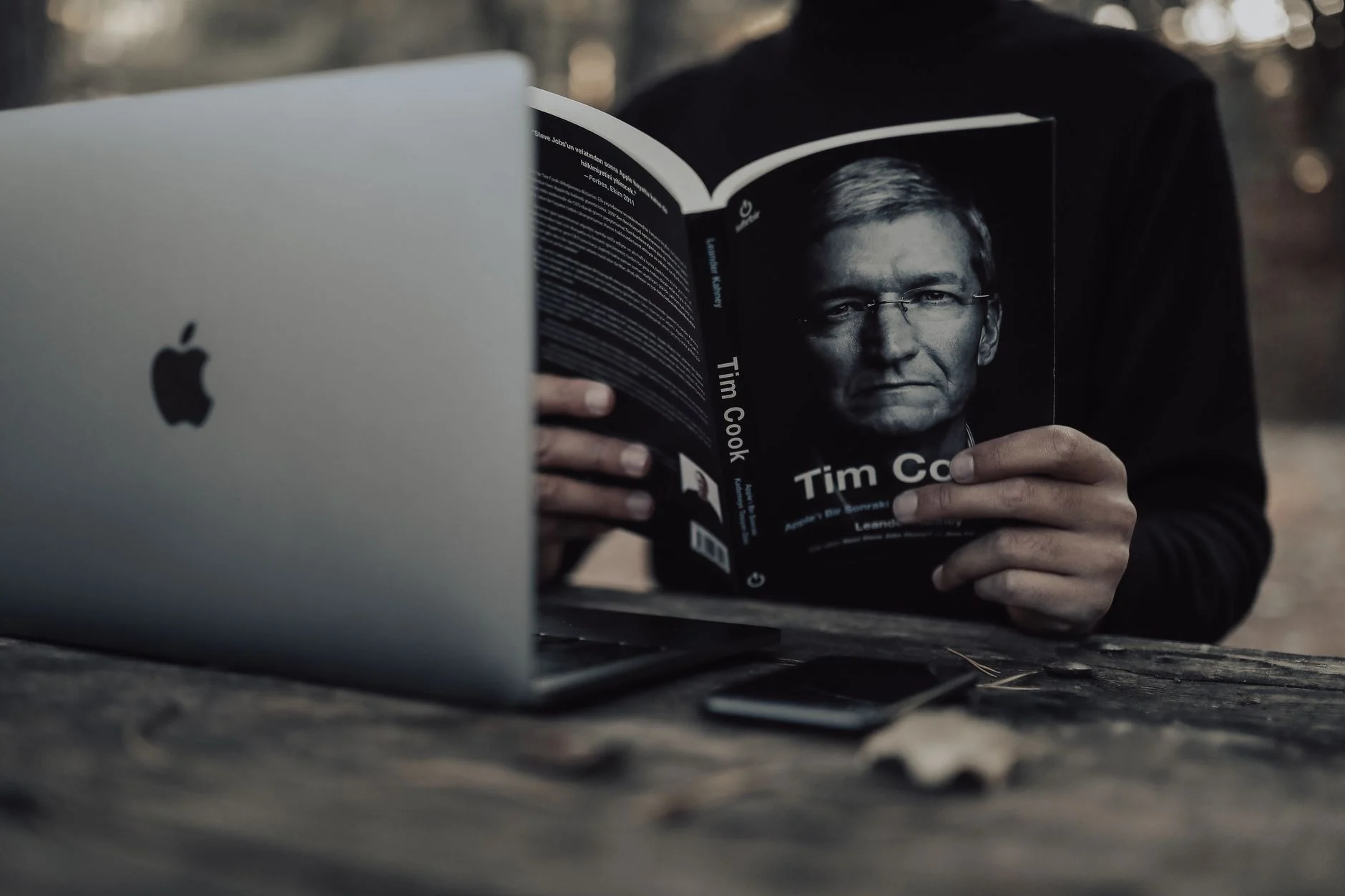

Tim Cook’s 15-year run as Apple CEO ends on August 31, 2026. His time in charge changed the company’s size, products, and place in everyday life.
John Ternus becomes CEO on September 1, while Cook moves to executive chairman.
From Alabama to Apple
Timothy Donald Cook was born on November 1, 1960, in Mobile, Alabama, and grew up in Robertsdale. He came to technology through operations.
Cook studied industrial engineering at Auburn University, learning how to make large systems run more efficiently. He later earned an MBA from Duke University.
Cook spent 12 years at IBM, eventually becoming director of North American Fulfillment. He then worked at Intelligent Electronics and briefly served as a vice president at Compaq. Apple’s executive biography shows that much of his early career focused on manufacturing, shipping, inventory, sales, and operations.
Steve Jobs recruited Cook to Apple in 1998. Cook took a risk by leaving Compaq after only a few months to join a company still recovering from years of financial trouble. The choice paid off and helped shape Apple for decades.
Building Apple’s operations
Cook joined as senior vice president of Operations. Apple’s board promoted him to executive vice president of Worldwide Sales and Operations in 2002.
Jobs put him in charge of the Macintosh division in 2004. In 2005, Apple named him Chief Operating Officer (COO).
Cook pushed Apple to keep less unused inventory and work more closely with suppliers. He built a supply chain that could produce huge numbers of devices on tight schedules. The work behind each launch became one of Apple’s strengths.
Jobs supplied the product vision and remained Apple’s public face. Cook built the worldwide system that could deliver those ideas. Their different strengths made the partnership work.
Taking over after Steve Jobs
By 2011, Jobs’ health prevented him from leading Apple day to day. On August 24, 2011, he resigned as CEO and recommended Cook as his successor. Apple’s board accepted that recommendation. Jobs stayed on as chairman and supported the transition until his death on October 5, 2011.
Cook faced intense pressure because Jobs was so closely tied to Apple’s identity. People questioned whether the company could stay creative and successful without its co-founder.
Jobs had built and rebuilt Apple’s foundation. Cook’s task was to build on that legacy with a company that could keep shipping products and growing around the world. His approach made Apple less dependent on a single larger-than-life leader.
Making Apple’s growth last
Cook inherited the iPhone, iPad, Mac, App Store, and a powerful brand. Jobs had returned to a struggling Apple, while Cook took over a fast-growing business. His challenge was making its success last.
Apple expanded its stores, supplier network, active devices, and services business. It also kept releasing new versions of its biggest products each year.
Cook’s operations background helped Apple plan years ahead.
The company could spend heavily on factories, secure parts years ahead of competitors, and launch products in many countries at once. Its growing size gave Apple an advantage few companies could match.
The products and services that defined the Cook era
Apple’s hardware, software, chip, services, design, and operations teams deserve credit for the products released under Cook. As CEO, he set the direction, chose where to spend money, and decided which projects and teams could move forward.
| Year | Apple move | Why it mattered |
|---|---|---|
| 2014 | Apple Watch | Expanded Apple beyond the iPhone by making wearables, health, and fitness a major part of its future product lineup. |
| 2014 | Apple Pay | Helped move payments from wallets to phones and watches, making tap-to-pay a normal part of everyday life around the world. |
| 2015 | Apple Music | Helped shift music from owning individual songs to streaming entire libraries, changing how people listen and pay for music. |
| 2016 | AirPods | AirPods became one of Apple’s biggest success stories, making its devices work better together while building an estimated $100 billion lifetime business by 2026. For scale, that is larger than the yearly GDP of countries like Iceland, Jamaica, and The Bahamas. |
| 2019 | Apple TV+ | Moved Apple into original movies and television with Apple TV+, turning a late-starting streaming service into an awards powerhouse. Apple even became the first streaming company to win the Oscar for Best Picture with CODA, beating Netflix, Amazon, and Disney to that milestone. |
| 2020 | Apple silicon for Mac | Moved the Mac away from Intel and into Apple silicon, giving Apple full control over the chips inside its computers. The shift made Macs faster, more power-efficient, and better connected to Apple’s software, turning the Mac from a product line people thought was fading into one of Apple’s strongest comeback stories. |
| 2024 | Apple Vision Pro | Opened Apple’s first major new product platform since Apple Watch with Vision Pro, showing the company was still willing to spend years building hardware for a future most people had not even imagined yet. Read our review here. |
Apple silicon stands out among those changes. Apple already designed iPhone and iPad chips, and the Mac transition extended that control to its computers.
The transition freed Apple from Intel’s chip schedule and saved money.
Apple’s growth in revenue and valuation
Apple reported $108.25 billion in net sales for fiscal 2011. By fiscal 2025, annual net sales had reached $416.16 billion.
Services brought in $109.16 billion in fiscal 2025, about as much as all of Apple earned in sales in 2011. The iPhone remained its largest single business. Subscriptions, cloud services, the App Store, payments, music, television, warranties, and other services added steady income around its devices.
Apple’s valuation rose from about $347 billion when Cook became CEO to roughly $4.6 trillion by his final day. Its value grew more than 13 times, making Apple one of the most valuable businesses in history.
Privacy, health, and Apple’s public values

Privacy
Privacy became one of Apple’s most repeated values under Cook. Apple now calls privacy a basic human right. The company has built many product choices around processing data on the device, asking for permission, using encryption, and giving users more control over tracking.
Accessibility
Accessibility also became a bigger company-wide goal. Apple kept adding tools such as VoiceOver, Magnifier, Live Listen, Assistive Access, accessibility labels, and other features across its devices. Cook has often said accessibility should be built into Apple products from the start instead of added later.


Health
Health became another major focus through Apple Watch and the Health app. Heart-rate alerts, fall detection, ECG features, workout tracking, hearing-health tools, and emergency features helped Apple devices become useful for much more than normal consumer technology.
Environment
Apple also made environmental goals a major part of its public plans. In 2025, the company said it had cut its worldwide greenhouse-gas emissions by more than 60% compared with 2015 as it worked toward its long-term climate goals.


Diversity and Inclusion
Cook also spoke more openly about social issues than many major technology CEOs before him. In 2014, he became the first CEO of a Fortune 500 company to publicly identify as gay. His decision made him one of the most well-known openly gay business leaders in the world and gave a personal side to Apple’s support for equality and civil rights.
The problems Cook leaves behind
Apple’s manufacturing network became heavily dependent on China. Political disputes, trade fights, and supply problems exposed the risks of relying on one country. Apple has spent years moving more production elsewhere.
Governments also began examining the App Store, payment rules, and Apple’s control over its devices and software more closely.
Generative AI became another late challenge. Apple moved more carefully than several rivals, while delays to major Siri improvements raised questions about its pace. Reuters pointed to those AI challenges when Apple announced its CEO change.
Vision Pro showed Apple could still build an ambitious new type of device. Its high price and limited uses kept its audience far smaller than those of the iPhone, AirPods, and Apple Watch.
The company Cook built around its products
The Tim Cook legacy centers on planning and building a company that could keep going after its famous founder.
Cook kept Apple focused on premium products as it expanded into the devices and services above. He also gave its public values a larger place in the company’s identity.
Some of Apple’s biggest ideas came from teams whose work predated Cook’s time as CEO. Many were led by executives unfamiliar to most customers. Cook built a company that could fund those ideas, produce them at scale, and connect its devices and services.
Cook’s next role as executive chairman
Apple’s leadership change takes effect September 1, 2026. Cook will continue helping the company as executive chairman, including working with government leaders around the world.
We previously covered Apple’s leadership transition, and the handoff closes Cook’s 15-year CEO run. He leaves Ternus a larger company that reaches more parts of people’s lives and depends less on any single person.


Leave a Reply